Being sick used to be an event. A clear interruption. I would wake up, assess the situation honestly, and conclude that today I would contribute nothing to society except perhaps a damp impression on the couch. My absence was the point. My body had staged a quiet coup, and everyone agreed to respect it.
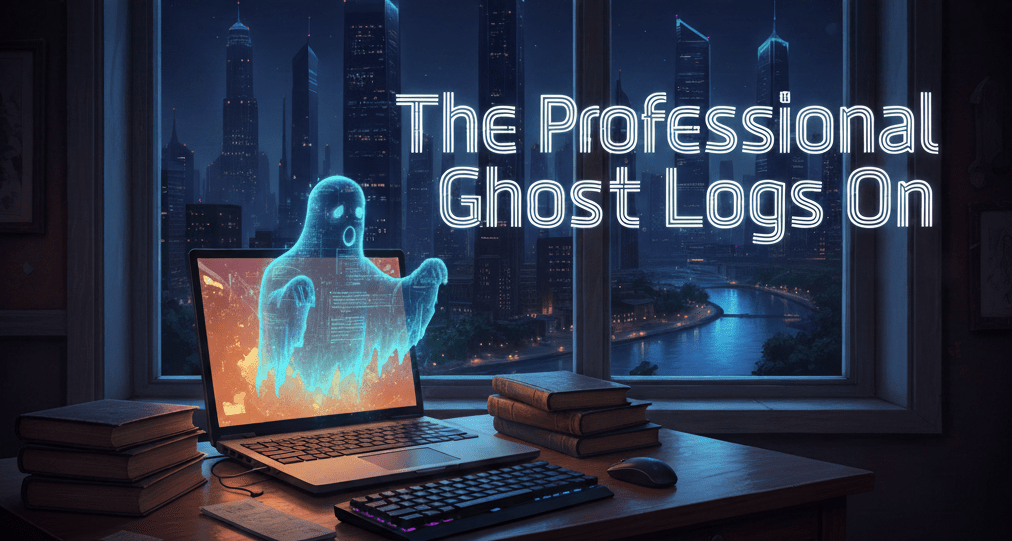
Now, since I work part of the time from home, being sick is more of a vibe. I am technically at work. My name appears in small green letters next to a reassuring word like “Available.” This is untrue in the way many modern things are untrue – aspirational, symbolic, held together by software and goodwill. I am not available. I am drifting through the day in a DayQuil haze, a professional ghost haunting my own job.
Remote work has eliminated the visible markers of illness that once granted clemency. No one can see the tissue constellation on my desk or hear the cough that sounds like it was engineered by a defunct factory. From the outside, via computer screen, I appear fine. From the inside, I feel like I have been lightly but repeatedly run over by a truck that is very committed to the task. And so I log in.
The sick day, as a concept, has not disappeared; it has simply become conditional. It now requires proof. You must be sick in a way that is legible to productivity culture. A fever that spikes dramatically. A voice that sounds legally unusable. Something you can point to and say, this is not compatible with deliverables. Mild-to-moderate illness is no longer sufficient. It is suspicious. It suggests you could still “push through,” which is the most sinister phrase in the English language when applied to the human body.
DayQuil exists to facilitate this negotiation. It does not make you better. It makes you plausible. You can sit upright. You can form sentences that are grammatically correct, if not spiritually committed. With a little assistance from AI, you can respond to emails with the appropriate level of concern while feeling nothing at all. You are no longer sick enough to rest, but not well enough to think. This is its own medical category, one not yet recognized by insurance.
In this state, work becomes an elaborate performance of adequacy. You write messages that say, “Let me know if you need anything else,” while praying no one does. You reread documents not because you are thorough, but because the words keep rearranging themselves. Time stretches. A single Slack message can take ten minutes to compose, largely because it feels important to sound normal.
There is a specific type of guilt attached to this liminal condition. I feel guilty for not working harder, and guilty for working at all. I apologize preemptively. I announce in every meeting that I am “a bit under the weather,” as though weather is something that is happening to me, not inside me, rearranging my organs.
The old sick day allowed for dignity. You were absent, therefore blameless. The new sick day requires constant self-assessment and moral calculation. Am I sick enough to stop? Or merely sick enough to slow down, visibly, while remaining accountable? The body, meanwhile, has no interest in these distinctions. It wants stillness. It wants sleep. It wants to be left alone to conduct its quiet, unseen labor of getting well. But the calendar does not recognize this work as legitimate. The calendar is unimpressed by immune responses.
So you hover. Present but diminished. A professional ghost with access to Google Docs.
Eventually, the illness will pass, as these things do. I will look back at the day and remember very little of what I accomplished, because the answer is probably “not much.” But I will have been there. Logged in. Been seen. Which, increasingly, seems to be the point. And somewhere in that soft, medicated fog, I realized that the true loss is not productivity, but permission – the permission to be fully unwell, without explanation, without apology, and without my ghost typing “Sounds good!” into a chat window it barely understands.
 Frequently Wrong, Rarely in Doubt
Leave a comment